UN2978 放射性物质,六氟化铀,非裂变或例外裂变的
RADIOACTIVE MATERIAL, URANIUM HEXAFLUORIDE non fissile or fissile-excepted
基本信息
| UN 编号 | UN2978 |
|---|---|
| 中文名称 | 放射性物质,六氟化铀,非裂变或例外裂变的 |
| 英文名称 | RADIOACTIVE MATERIAL, URANIUM HEXAFLUORIDE non fissile or fissile-excepted |
| 危险类别 | 第7类(副危险 6.1 / 8) |
| 包装类别 | 本条目未划定包装类别 |
| 海洋污染物 | 否 |
| 有限数量 | 0 |
| 例外数量 | E0 |
| EmS 应急措施 | F-I,S-S(F-I, S-S) |
物质性质与外观
见1.5.2节。
See 1.5.1.
出处:IMDG Code 42-24 第 713 页
包装要求
本条目在一览表中未列明包装导则。
中型散装容器(IBC)要求
本条目无中型散装容器(IBC)运输要求。
罐柜运输要求
本条目无罐柜运输要求(一览表罐柜导则栏为空)。
运输标签与标记
本货物包件应张贴以下标签与标记:
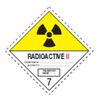 7B
7B放射性 II 类 7B
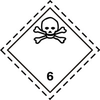 6.1
6.1毒性物质 6.1
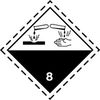 8
8腐蚀性物质 8
特殊规定(Special Provisions)
本条目适用特殊规定: 317。
SP 317
“易裂变物质除外”仅适用于根据第2.7.2.3.5条规定例外的易裂变物质和含有易裂变物质的包件。
“Fissile-excepted” applies only to those fissile materials and packages containing fissile material which are excepted in accordance with 2.7.2.3.5.
出处:IMDG Code 42-24 第 776 页
积载与隔离
| 积载与操作 | 积载类B SW2 SW12(Category B SW2 SW12) |
|---|---|
| 隔离 | SG17 SG76 SG78 |
积载操作代码(SW)
避开生活居住处所。
Clear of living quarters.
考虑运输文件中列明的所有补充要求。
Taking account of any supplementary requirements specified in the transport documents.
隔离代码(7.2.8)
与第5.1类“隔离”。
Stow “separated from” class 5.1.
按照第7类进行隔离。
Segregation as for class 7.
对于 1.1、1.2 和 1.5 小类”用介于中间的整个舱室或货舱纵向隔离”。
Stow “separated longitudinally by an intervening complete compartment or hold from” division 1.1, 1.2, and 1.5. Annex Segregation flow chart The use of this chart is not mandatory and is provided for information purposes only. Read the general segregation provisions (refer to 7.2) Identify the UN No., proper shipping name, class or division, subsidiary hazard class or division, if any, and where assigned packing group for each substance Are the dangerous goods exempted from the Yes Comply with the general segregation provisions exemption as (refer to e.g. 3.4, 3.5, 7.2.6.3 appropriate or 7.2.6.5)? No Is there any specific segregation No requirement in column 16b of Yes the Dangerous Goods List (DGL) or in the Transport Document (see 5.4.1.5.11)? Use the segregation table in Use the segregation table taking accordance with the general into account any specific or general segregation provisions segregation provisions and determine the specific segregation provisions for each substance (e.g. segregation groups) Conclusion Ensure the most stringent requirements are taken Conclusion Examples The following examples only illustrate the process of segregation. Subsequent additional provisions of this Code may apply (e.g. 7.3.4). Segregation of 300 kg of celluloid, scrap (UN 2002) in one drum and 200 L of epibromohydrin (UN 2558) in one drum..1 According to the Dangerous Goods List, UN 2002 is class 4.2, PG III, and UN 2558 is class 6.1, PG I and has a subsidiary hazard of class 3..2 Neither are exempted by 3.4, 3.5, 7.2.6.3 or 7.2.6.5..3 There are no specific segregation requirements for these substances in column 16b of the Dangerous Goods List..4 According to the segregation table given in 7.2.4 for classes 4.2 and 6.1, the intersecting box shows number 1, whereas for classes 4.2 and 3, the intersecting box shows a number 2. The value 2 is the more stringent, therefore the substances are required to be “separated from” one another. Segregation of 50 kg of potassium perchlorate (UN 1489) in one drum and 50 kg of nickel cyanide (UN 1653) in one drum..1 According to the Dangerous Goods List, UN 1489 is class 5.1, PG II and UN 1653 is class 6.1, PG II..2 Neither are exempted by 3.4, 3.5, 7.2.6.3 or 7.2.6.5..3 For UN 1489, column 16b of the Dangerous Goods List states “SG38” (“separated from” ammonium compounds other than AMMONIUM PERSULPHATE (UN 1444)) and “SG49” (“separated from” cyanides)..4 For UN 1653, column 16b of the Dangerous Goods List states “SG35” (“separated from” acids)..5 According to the segregation table given in 7.2.4 for classes 5.1 and 6.1, the intersecting box shows an “1”..6 According to the segregation groups in section 3.1.4, UN 1653 is listed in group 6 (cyanides)..7 Therefore, the substances are required to be “separated from” one another. Segregation of 10 kg of acetone (UN 1090) in one box and 20 kg of ethyldichlorosilane (UN 1183) in another box..1 According to the Dangerous Goods List, UN 1090 is class 3, PG II..2 According to the Dangerous Goods List, UN 1183 is class 4.3, PG I and has subsidiary hazards of classes 3 and 8..3 Neither are exempted by 3.4, 3.5, 7.2.6.3 or 7.2.6.5..4 UN 1090 has no specific segregation requirements in column 16b..5 For UN 1183, column 16b of the Dangerous Goods List states “SG5” (segregation as for class 3), “SG8” (“away from” class 4.1), “SG13” (“away from” class 8), “SG25” (“separated from” goods of classes 2.1 and 3) and “SG26” (in addition: from goods of classes 2.1 and 3 when stowed on deck of a containership a minimum distance of two container spaces athwartship shall be maintained, when stowed on ro-ro ships a distance of 6 m athwartship shall be maintained)..6 According to the segregation table given in 7.2.4, the intersecting box shows an “X” for classes and 3, but as UN 1183 is required to be “separated from” class 3, the substances are required to be “separated from” one another. In addition, when these substances are stowed on deck of a containership a minimum distance of two container spaces athwartship shall be maintained, and when they are stowed on ro-ro ships a distance of 6 m athwartship shall be maintained. Segregation of 10 kg of adhesives (UN 1133, PG III) in limited quantities and 40 kg of beryllium nitrate (UN 2464) in the same freight container..1 According to the Dangerous Goods List, UN 1133 is class 3, PG III..2 According to the Dangerous Goods List, UN 2464 is class 5.1, PG II and has a subsidiary hazard of class 6.1..3 According to section 3.4, UN 1133 in limited quantities is exempted from the segregation provisions of part 7..4 Therefore, no segregation requirements shall apply.
同类其他 UN 号
- UN2908 放射性物质,例外包件- 空包件
- UN2909 放射性物质,例外包件- 由天然铀、贫化铀或天然钍制成的物品
- UN2910 放射性物质,例外的包件 -限量物质
- UN2911 放射性物质,例外包件- 仪器或物品
- UN2912 放射性物质,低比活度 (LSA-I),非裂变的或例外裂变的
- UN2913 放射性物质,表面被污染物体(SCO-I或SCO-II),非裂变或例外裂变的
- UN2915 放射性物质,A型包件,非特殊形式,非裂变或例外裂变的
- UN2916 放射性物质,B(U)型包件,非裂变或例外裂变的
- UN2917 放射性物质,B(M)型包件,非裂变或例外裂变的
- UN2919 放射性物质,按特殊安排运输,非裂变或例外裂变的
- UN2977 放射性物质,六氟化铀,可裂变的,六氟化铀,可裂变的
- UN3321 放射性材料,小比活度 (LSA-II),非裂变或例外裂变的
延伸阅读
-
危包证怎么办?船级社证、钢瓶证、SOC 罐证的区别
出口危险货物包装使用鉴定结果单(危包证)的办理逻辑,以及它和船级社证、钢瓶证、SOC 罐证分别在什么场景下用、向谁申请。
-
DG 申请表填写常见错误 TOP 10(附船公司退回原因)
DG 申请表(DGD)被船公司退回,十有八九是这十个问题。逐条列出错误表现、船司退回话术和正确填法。
要出这票货?直接生成 DG 申报资料
按 UN2978 自动带出类别、包装组、隔离要求与危包证清单,省掉翻书对表的时间。
生成 DG 申报资料 →