IMDG Code 42-24 · Dangerous Goods List

Open interactive lookup ↗

UN30232-METHYL-2-HEPTANETHIOL

English proper shipping name · Check the cargo and applicable provisions before shipment.

Class6.1
Packing groupI
EmSF-E, S-D

Dangerous Goods List entries

The comparison below lists all entries. Expanded provisions and the label preview on this page apply to Entry 1.

Compare all 1 DGL entry

Entry 1 · Packing group I

2-METHYL-2-HEPTANETHIOL

Class
6.1
Subsidiary risk / reference
3
Packing group
I
Marine pollutant entry
Not listed; check the cargo classification
Limited quantities
0
Excepted quantities
E0
Packing instruction
P602
Special provisions
354
Special packing provision
Not listed
IBC instruction
Not listed
IBC special provisions
Not listed
Portable tank / bulk container codes
T20
Tank special provisions
TP2 TP13
EmS
F-E, S-D
Stowage and handling
Category D SW2 Category D SW2
Segregation
SG57
Properties and observations · source text
Colourless flammable liquid with a foul odour. Flashpoint: 31 C c.c. ° Miscible with water. Highly toxic if swallowed, by skin contact or by inhalation.

Packing and large packaging instructions

P602

Source pages and references

Check original English pages and footnotes ↗ · official PDF 215–215

P602 The following packagings are authorized, provided the general provisions of 4.1.1 and 4.1.3 are met and the packagings are hermetically sealed: (1) Combination packagings with a maximum gross mass of 15 kg, consisting of: (a) one or more glass inner packaging(s) with a maximum net quantity of 1 L each and filled to not more than 90% of their capacity, the closure(s) of which shall be physically held in place by any means capable of preventing back-off or loosening by impact or vibration during transport, individually placed in (b) metal receptacles together with cushioning and absorbent material sufficient to absorb the entire contents of the glass inner packaging(s), further packed in (c) 1A1, 1A2, 1B1, 1B2, 1N1, 1N2, 1H1, 1H2, 1D, 1G, 4A, 4B, 4N, 4C1, 4C2, 4D, 4F, 4G or 4H2 outer packagings. (2) Combination packagings consisting of metal or plastics inner packagings individually packed with absorbent material sufficient to absorb the contents and inert cushioning material in 1A1, 1A2, 1B1, 1B2, 1N1, 1N2, 1H1, 1H2 1D, 1G, 4A, 4B, 4N, 4C1, 4C2, 4D, 4F, 4G or 4H2 outer packagings with a maximum gross mass of 75 kg. Inner packagings shall not be filled to more than 90% of their capacity. The closure of each inner packaging shall be physically held in place by any means capable of preventing back-off or loosening of the closure by impact or vibration during transport. Inner packagings shall not exceed 5 L in capacity. (3) Drums and composite packagings (1A1, 1B1, 1N1, 1H1, 6HA1 or 6HH1), subject to the following conditions:.1 the hydraulic pressure test shall be conducted at a pressure of at least 3 bar (gauge pressure);.2 the design and production leakproofness tests shall be conducted at a test pressure of 0.30 bar; and.3 closures shall be of a screw-cap type that are: (i) physically held in place by any means capable of preventing back-off or loosening of the closure by impact or vibration during transport; and (ii) provided with a cap seal. (4) Pressure receptacles, provided that the general provisions of 4.1.3.6 are met. They shall be subjected to an initial test and periodic tests every 10 years at a pressure of not less than 1 MPa (10 bar) (gauge pressure). Pressure receptacles may not be equipped with any pressure relief device. Each pressure receptacle containing a toxic by inhalation liquid with an LC less than or equal to 200 mL m3 (ppm) shall be closed with a plug or valve / conforming to the following: (a) Each plug or valve shall have a taper-threaded connection directly to the pressure receptacle and be capable of withstanding the test pressure of the pressure receptacle without damage or leakage; (b) Each valve shall be of the packless type with non-perforated diaphragm, except that, for corrosive materials, a valve may be of the packed type with an assembly made gas-tight by means of a seal cap with gasket joint attached to the valve body or the pressure receptacle to prevent loss of material through or past the packing; (c) Each valve outlet shall be sealed by a threaded cap or threaded solid plug and inert gasket material; (d) The materials of construction for the pressure receptacle, valves, plugs, outlet caps, luting and gaskets shall be compatible with each other and with the lading. Each pressure receptacle with a wall thickness at any point of less than 2.0 mm and each pressure receptacle that does not have fitted valve protection shall be transported in an outer packaging. Pressure receptacles shall not be manifolded or interconnected.

IMDG Code 42-24 · English source text
Portable tank instructions

T20

Source pages and references

Check original English pages and footnotes ↗ · official PDF 260–267

These portable tank instructions apply to liquid and solid substances of class 1 and classes 3 to 9. The general provisions of section 4.2.1 and the requirements of section 6.7.2 shall be met. The instructions for portable tanks with FRP shells apply to substances of classes or divisions 1, 3, 5.1, 6.1, 6.2, 8 and 9. Additionally, the provisions of chapter 6.10 apply to the portable tanks with FRP shells.

T20 · Selected instruction · IMDG 42-24
Portable tank instructionMinimum test pressure (bar)Minimum shell thickness (in mm – reference steel) (see 6.7.2.4)Pressure relief provisionsa (see 6.7.2.8)Bottom opening provisionsb (see 6.7.2.6)
T20108 mmSee 6.7.2.8.3Not allowed

a When the word “Normal” is indicated, all the provisions of 6.7.2.8 apply except for 6.7.2.8.3. b When this column indicates “not allowed”, bottom openings are not permitted when the substance to be transported is a liquid (see 6.7.2.6.1). When the substance to be transported is a solid at all temperatures encountered under normal conditions of transport, bottom openings conforming to the provisions of 6.7.2.6.2 are authorized.

Source PDF pages:264 · 42-24

Extracted source text
S T1 – T22 These portable tank instructions apply to liquid and solid substances of class 1 and classes 3 to 9. The general provisions of section 4.2.1 and the requirements of section 6.7.2 shall be met. The instructions for portable tanks with FRP shells apply to substances of classes or divisions 1, 3, 5.1, 6.1, 6.2, 8 and 9. Additionally, the provisions of chapter 6.10 apply to the portable tanks with FRP shells. Minimum shell thickness Pressure relief Bottom opening (in mm – reference provisionsa provisionsb instruction pressure (bar) steel) (see 6.7.2.8) (see 6.7.2.6) (see 6.7.2.4) 10 8 mm See 6.7.2.8.3 Not allowed

IMDG Code 42-24 · English source text
Tank special provisions

TP13

Source pages and references

Check original English pages and footnotes ↗ · official PDF 268–268

Self-contained breathing apparatus shall be provided when this substance is transported, unless no self-contained breathing apparatus, as required by SOLAS regulation II-2/19 (II-2/54), is on board.

IMDG Code 42-24 · English source text

Special provisions

Stowage and handling codes

Segregation codes

Labels and marks

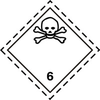
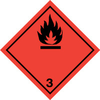
Reference preview for Entry 1 · Packing group I. Confirm the cargo classification and any conditions in the special provisions.

Toxic substance 6.1
Toxic substance 6.1
Flammable liquid 3
Flammable liquid 3

Explore this class