IMDG Code 42-24 · Dangerous Goods List

Open interactive lookup ↗

UN3250CHLOROACETIC ACID, MOLTEN

English proper shipping name · Check the cargo and applicable provisions before shipment.

Class6.1
Packing groupII
EmSF-A, S-B

Dangerous Goods List entries

The comparison below lists all entries. Expanded provisions and the label preview on this page apply to Entry 1.

Compare all 1 DGL entry

Entry 1 · Packing group II

CHLOROACETIC ACID, MOLTEN

Class
6.1
Subsidiary risk / reference
8
Packing group
II
Marine pollutant entry
Not listed; check the cargo classification
Limited quantities
0
Excepted quantities
E0
Packing instruction
Not listed
Special provisions
Not listed
Special packing provision
Not listed
IBC instruction
Not listed
IBC special provisions
Not listed
Portable tank / bulk container codes
T7
Tank special provisions
TP3 TP28
EmS
F-A, S-B
Stowage and handling
Category C SW2 Category C SW2
Segregation
SGG1 SG36 SG49
Properties and observations · source text
Molten liquid. Melting point may be as low as 50 C. ° Toxic if swallowed, by skin contact or by inhalation. Causes burns to skin, eyes and mucous membranes.
Portable tank instructions

T7

Source pages and references

Check original English pages and footnotes ↗ · official PDF 260–267

These portable tank instructions apply to liquid and solid substances of class 1 and classes 3 to 9. The general provisions of section 4.2.1 and the requirements of section 6.7.2 shall be met. The instructions for portable tanks with FRP shells apply to substances of classes or divisions 1, 3, 5.1, 6.1, 6.2, 8 and 9. Additionally, the provisions of chapter 6.10 apply to the portable tanks with FRP shells.

T7 · Selected instruction · IMDG 42-24
Portable tank instructionMinimum test pressure (bar)Minimum shell thickness (in mm – reference steel) (see 6.7.2.4)Pressure relief provisionsa (see 6.7.2.8)Bottom opening provisionsb (see 6.7.2.6)
T74See 6.7.2.4.2NormalSee 6.7.2.6.3

a When the word “Normal” is indicated, all the provisions of 6.7.2.8 apply except for 6.7.2.8.3. b When this column indicates “not allowed”, bottom openings are not permitted when the substance to be transported is a liquid (see 6.7.2.6.1). When the substance to be transported is a solid at all temperatures encountered under normal conditions of transport, bottom openings conforming to the provisions of 6.7.2.6.2 are authorized.

Source PDF pages:264 · 42-24

Extracted source text
S T1 – T22 These portable tank instructions apply to liquid and solid substances of class 1 and classes 3 to 9. The general provisions of section 4.2.1 and the requirements of section 6.7.2 shall be met. The instructions for portable tanks with FRP shells apply to substances of classes or divisions 1, 3, 5.1, 6.1, 6.2, 8 and 9. Additionally, the provisions of chapter 6.10 apply to the portable tanks with FRP shells. Minimum shell thickness Pressure relief Bottom opening (in mm – reference provisionsa provisionsb instruction pressure (bar) steel) (see 6.7.2.8) (see 6.7.2.6) (see 6.7.2.4) 4 See 6.7.2.4.2 Normal See 6.7.2.6.3

IMDG Code 42-24 · English source text

Tank special provisions

TP3

Source pages and references

Check original English pages and footnotes ↗ · official PDF 267–267

The maximum degree of filling (in%) for solids transported above their melting points and for elevated temperature liquids shall be determined in accordance with 4.2.1.9.5.

IMDG Code 42-24 · English source text

TP28

Source pages and references

Check original English pages and footnotes ↗ · official PDF 268–268

A portable tank having a minimum test pressure of 2.65 bar may be used if it is shown that a test pressure of 2.65 bar or less is acceptable according to the test pressure definition in 6.7.2.1.

IMDG Code 42-24 · English source text

Stowage and handling codes

Segregation groups

Segregation codes

Labels and marks

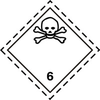
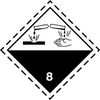
Reference preview for Entry 1 · Packing group II. Confirm the cargo classification and any conditions in the special provisions.

Toxic substance 6.1
Toxic substance 6.1
Corrosive 8
Corrosive 8

Explore this class