P208
Source pages and references
Check original English pages and footnotes ↗ · official PDF 198–199
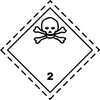
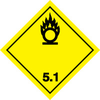
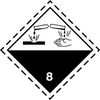
P208 This instruction applies to class 2 adsorbed gases. (1) The following packagings are authorized provided the general packing requirements of 4.1.6.1 are met: (a) cylinders constructed as specified in 6.2.2 and in accordance with ISO 11513:2011, ISO 11513:2019, ISO 9809-1:2010 or ISO 9809-1:2019; and (b) cylinders constructed before 1 January 2016 in accordance with 6.2.3 and a specification approved by the competent authorities of the countries of transport and use. (2) The pressure of each filled cylinder shall be less than 101.3 kPa at 20C and less than 300 kPa at 50C. ° ° (3) The minimum test pressure of the cylinder shall be 21 bar. (4) The minimum burst pressure of the cylinder shall be 94.5 bar. (5) The internal pressure at 65C of the filled cylinder shall not exceed the test pressure of the cylinder. ° (6) The adsorbent material shall be compatible with the cylinder and shall not form harmful or dangerous compounds with the gas to be adsorbed. The gas in combination with the adsorbent material shall not affect or weaken the 4 cylinder or cause a dangerous reaction (e.g. a catalyzing reaction). (7) The quality of the adsorbent material shall be verified at the time of each fill to assure the pressure and chemical stability requirements of this packing instruction are met each time an adsorbed gas package is offered for transport. (8) The adsorbent material shall not meet the criteria of any of the classes or divisions in this Code. (9) Requirements for cylinders and closures containing toxic gases with an LC less than or equal to mL/m3 (ppm) (see table 1) shall be as follows: (a) Valve outlets shall be fitted with pressure retaining gas-tight plugs or caps having threads matching those of the valve outlets. (b) Each valve shall either be of the packless type with non-perforated diaphragm, or be of a type which prevents leakage through or past the packing. (c) Each cylinder and closure shall be tested for leakage after filling. (d) Each valve shall be capable of withstanding the test pressure of the cylinder and be directly connected to the cylinder by either a taper-thread or other means which meets the requirements of ISO 10692-2:2001. (e) Cylinders and valves shall not be fitted with a pressure relief device. (10) Valve outlets for cylinders containing pyrophoric gases shall be fitted with gas-tight plugs or caps having threads matching those of the valve outlets. (11) The filling procedure shall be in accordance with annex A of ISO 11513:2011 (applicable until 31 December 2024) or annex A of ISO 11513:2019. (12) The maximum period for periodic inspections shall be 5 years. (13) Special packing provisions that are specific to a substance (see table 1). Material compatibility a: Aluminium alloy cylinders shall not be used. d: When steel cylinders are used, only those bearing the “H” mark in accordance with 6.2.2.7.4 (p) are permitted. Gas specific provisions r: The filling ratio of this gas shall be limited such that, if complete decomposition occurs, the pressure does not exceed two thirds of the test pressure of the cylinder. Material compatibility for N.O.S. adsorbed gas entries z: The construction materials of the cylinders and their accessories shall be compatible with the contents and shall not react to form harmful or dangerous compounds therewith. (continued) P208 Table 1: ADSORBED GASES Special UN Class or Subsidiary LC Proper shipping name 50 packing No. Division hazard mL/m3 provisions ⊗ 3510 ADSORBED GAS, FLAMMABLE, N.O.S. 2.1 z 3511 ADSORBED GAS, N.O.S. 2.2 z 3512 ADSORBED GAS, TOXIC, N.O.S. 2.3 5,000 z ≤ 3513 ADSORBED GAS, OXIDIZING, N.O.S. 2.2 5.1 z 3514 ADSORBED GAS, TOXIC, FLAMMABLE, N.O.S. 2.3 2.1 5,000 z ≤ 3515 ADSORBED GAS, TOXIC, OXIDIZING, N.O.S. 2.3 5.1 5,000 z ≤ 3516 ADSORBED GAS, TOXIC, CORROSIVE, N.O.S. 2.3 8 5,000 z ≤ 3517 ADSORBED GAS, TOXIC, FLAMMABLE, 2.3 2.1 5,000 z ≤ CORROSIVE, N.O.S. 8 3518 ADSORBED GAS, TOXIC, OXIDIZING, 2.3 5.1 5,000 z ≤ CORROSIVE, N.O.S. 8 3519 BORON TRIFLUORIDE, ADSORBED 2.3 8 387 a 3520 CHLORINE, ADSORBED 2.3 5.1 293 a 3521 SILICON TETRAFLUORIDE, ADSORBED 2.3 8 450 a 3522 ARSINE, ADSORBED 2.3 2.1 20 d 3523 GERMANE, ADSORBED 2.3 2.1 620 d, r 3524 PHOSPHORUS PENTAFLUORIDE, ADSORBED 2.3 8 190 3525 PHOSPHINE, ADSORBED 2.3 2.1 20 d 3526 HYDROGEN SELENIDE, ADSORBED 2.3 2.1 2
IMDG Code 42-24 · English source text