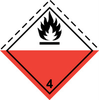
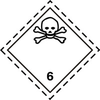
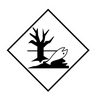
Molten liquid. Melting point: 44 C. Ignites spontaneously in air. ° Toxic if swallowed, by skin contact or by inhalation. Shipped molten above its melting point.
These portable tank instructions apply to liquid and solid substances of class 1 and classes 3 to 9. The general provisions of section 4.2.1 and the requirements of section 6.7.2 shall be met. The instructions for portable tanks with FRP shells apply to substances of classes or divisions 1, 3, 5.1, 6.1, 6.2, 8 and 9. Additionally, the provisions of chapter 6.10 apply to the portable tanks with FRP shells.
T21 · Selected instruction · IMDG 42-24
Portable tank instruction
Minimum test pressure (bar)
Minimum shell thickness (in mm – reference steel) (see 6.7.2.4)
Pressure relief provisionsa (see 6.7.2.8)
Bottom opening provisionsb (see 6.7.2.6)
T21
10
10 mm
Normal
Not allowed
a When the word “Normal” is indicated, all the provisions of 6.7.2.8 apply except for 6.7.2.8.3.
b When this column indicates “not allowed”, bottom openings are not permitted when the substance to be transported
is a liquid (see 6.7.2.6.1). When the substance to be transported is a solid at all temperatures encountered under normal
conditions of transport, bottom openings conforming to the provisions of 6.7.2.6.2 are authorized.
Source PDF pages:264 · 42-24
Extracted source text
S T1 – T22 These portable tank instructions apply to liquid and solid substances of class 1 and classes 3 to 9. The general provisions of section 4.2.1 and the requirements of section 6.7.2 shall be met. The instructions for portable tanks with FRP shells apply to substances of classes or divisions 1, 3, 5.1, 6.1, 6.2, 8 and 9. Additionally, the provisions of chapter 6.10 apply to the portable tanks with FRP shells. Minimum shell thickness Pressure relief Bottom opening (in mm – reference provisionsa provisionsb instruction pressure (bar) steel) (see 6.7.2.8) (see 6.7.2.6) (see 6.7.2.4) 10 10 mm Normal Not allowed
The maximum degree of filling (in%) for solids transported above their melting points and for elevated temperature liquids shall be determined in accordance with 4.2.1.9.5.
When transported under heated conditions, the heating device shall be fitted outside the shell. For UN 3176, this provision only applies when the substance reacts dangerously with water.
IMDG Code 42-24 · English source text
Labels and marks
Reference preview for Entry 1 · Packing group I. Confirm the cargo classification and any conditions in the special provisions.
Spontaneously combustible 4.2Toxic substance 6.1Marine pollutant mark